

Can a Light Steel Villa be Built in Cold Regions?
As a supplier of light steel villas, I often get asked whether these structures can be successfully built in cold regions. This is a crucial question, considering the unique challenges that cold climates present. In this blog post, I'll delve into the feasibility of constructing light steel villas in cold areas, exploring the advantages, challenges, and solutions.
Advantages of Light Steel Villas in Cold Regions
One of the primary advantages of light steel villas in cold regions is their excellent structural strength. Light steel frames are made from high - strength steel, which can withstand heavy snow loads. In cold areas, snow accumulation on rooftops can be a significant issue, and traditional building materials may not be as effective in handling these loads. The steel frames of light steel villas are engineered to distribute the weight evenly, reducing the risk of structural damage caused by snow.
Another benefit is the speed of construction. In cold regions, the construction season is often limited due to harsh weather conditions. Light steel villas are pre - fabricated, which means that a significant portion of the building process takes place in a factory environment. This reduces the time spent on - site, allowing the construction to be completed more quickly before the coldest months set in.
Energy efficiency is also a major advantage. Light steel villas can be well - insulated, which is essential in cold climates. Insulation materials can be easily integrated into the steel frame structure, helping to keep the interior warm and reducing heating costs. Additionally, the tight construction of light steel villas minimizes air leakage, further improving energy efficiency.
Challenges of Building Light Steel Villas in Cold Regions
Despite the many advantages, there are also several challenges associated with building light steel villas in cold regions. One of the main challenges is corrosion. Cold regions often experience high humidity and freezing - thawing cycles, which can accelerate the corrosion of steel. If not properly protected, the steel frames can deteriorate over time, compromising the structural integrity of the villa.
Another challenge is the impact of extreme cold on the building materials. Some construction materials may become brittle in cold temperatures, which can lead to cracking or other forms of damage. For example, the adhesives used in the construction process may lose their effectiveness in cold conditions.
The foundation is also a critical issue. In cold regions, the ground can freeze and expand, causing the foundation to shift. This can lead to cracks in the walls and floors of the villa, and in severe cases, can even cause the entire structure to become unstable.
Solutions to the Challenges
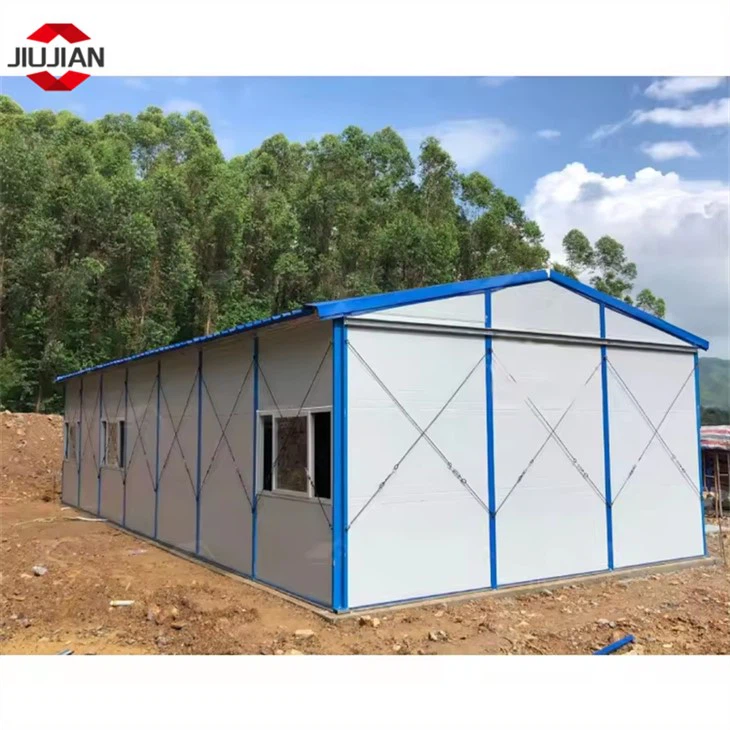
To address the issue of corrosion, we use high - quality galvanized steel in our Galvanised Steel K - type Prefabricated House. Galvanization is a process that coats the steel with a layer of zinc, which acts as a protective barrier against corrosion. This significantly extends the lifespan of the steel frames, even in harsh cold - climate conditions.
For the problem of extreme cold affecting building materials, we carefully select materials that are suitable for cold temperatures. We use adhesives and sealants that are specifically formulated to maintain their properties in low - temperature environments. Additionally, we conduct thorough quality control checks to ensure that all materials meet the required standards for cold - region construction.

To deal with the foundation issue, we design and construct deep - seated foundations that are resistant to frost heave. These foundations are engineered to withstand the expansion and contraction of the ground due to freezing and thawing cycles. We also use proper drainage systems around the foundation to prevent water from accumulating and causing further damage.
Case Studies
There have been numerous successful light steel villa projects in cold regions. For example, in some areas of northern Canada, where the winters are extremely cold, light steel villas have been built and have proven to be durable and energy - efficient. These villas are well - insulated, and the steel frames have withstood heavy snow loads and harsh weather conditions for many years.
In Russia, where large parts of the country experience long and cold winters, light steel villas are becoming increasingly popular. The pre - fabricated nature of these villas allows for quick construction, which is essential in a climate where the construction season is limited.
Conclusion
In conclusion, light steel villas can indeed be built in cold regions. They offer many advantages, such as structural strength, fast construction, and energy efficiency. While there are challenges associated with corrosion, material performance in cold temperatures, and foundation stability, these can be effectively addressed through proper design, material selection, and construction techniques.
If you are considering building a light steel villa in a cold region, I encourage you to explore our Light Steel Villa House and Color Steel House options. Our team of experts is ready to assist you in every step of the process, from design to construction. We can provide customized solutions based on your specific needs and the local climate conditions. Contact us today to start the conversation about your dream light steel villa in a cold region.
References
- "Building in Cold Climates: A Guide to Best Practices", National Building Research Institute
- "Steel Construction in Harsh Environments", American Institute of Steel Construction
- "Energy - Efficient Building Design for Cold Regions", International Energy Agency