


Living Container House
What is Living Container House
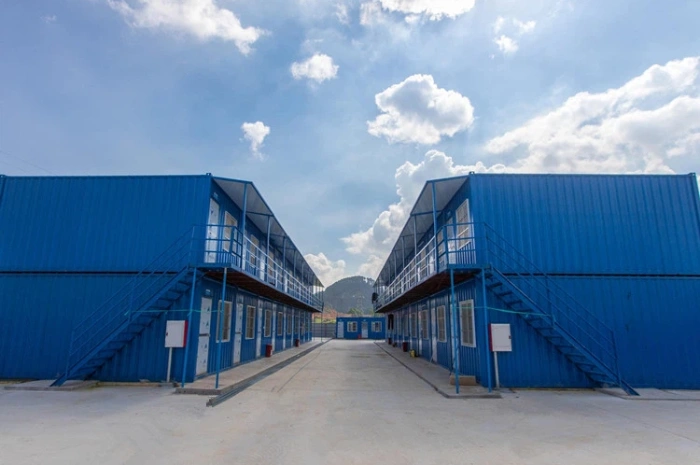
Container homes are an innovative concept wherein a steel structure, ship structures, basically, is transformed into a living space. These huge containers which are as big as a single floor of a home are stacked and joined to make multiple storeys.
Benefits of Living Container House
Affordability
One of the biggest advantages of shipping container homes is their affordability. Since shipping containers are readily available and relatively cheap, building a container home can be much less expensive than building a traditional home. In addition, container homes require less construction time and labor, which further reduces costs.
Sustainability
Container homes are considered environmentally friendly since they are made from recycled materials. By repurposing shipping containers, we can reduce waste and contribute to sustainable living. Moreover, container homes can be fitted with solar panels, rainwater harvesting systems, and other eco-friendly features to further minimize their environmental impact.
Mobility
Shipping container homes are portable, which means that they can be transported to different locations with ease. This feature makes them a popular choice for those who need temporary housing or those who want to live off-grid. Container homes can also be designed to be modular, making it easy to expand or downsize the living space as needed.
Durability
Shipping containers are designed with container parts that can withstand harsh weather conditions and the wear and tear of transportation. As a result, container homes are incredibly durable and can last for decades with minimal maintenance. This makes them a good investment for those who want a long-lasting, low-maintenance home.
-
![Living Container House]() Living Container HouseLiving container house is a new way to build homes. It can be moved anywhere, allowing people to live as they wish. Solar panels can provide electricity and water, and heat water for showers. The...read more
Living Container HouseLiving container house is a new way to build homes. It can be moved anywhere, allowing people to live as they wish. Solar panels can provide electricity and water, and heat water for showers. The...read more -
![Living Container Houses]() Living Container HousesLiving container houses are usually made of steel or aluminium and feature strong, durable structures that are easy to stack and transport. By retrofitting and decorating containers, it is...read more
Living Container HousesLiving container houses are usually made of steel or aluminium and feature strong, durable structures that are easy to stack and transport. By retrofitting and decorating containers, it is...read more -
![Economic Living Container House]() Economic Living Container HouseEconomical container homes are designed and built using shipping containers, often with minimalist designs and economical materials to reduce construction and maintenance costs. Despite being less...read more
Economic Living Container HouseEconomical container homes are designed and built using shipping containers, often with minimalist designs and economical materials to reduce construction and maintenance costs. Despite being less...read more


Why Choose Us
Fast Delivery
Strong production capacity, Complete packaging ensures product quality and is shipped to the destination in the first time.
Rich experience
Has a long-standing reputation in the industry, which makes it stand out from its competitors. With over many years of experience, they have developed the skills necessary to meet their clients' needs.
Efficient and convenient
The company has established marketing networks around the world to provide high-quality services to customers in an efficient and convenient manner.
Professional team
We have a team of skilled and experienced professionals who are well-versed in the latest technology and industry standards. Our team is dedicated to ensuring that our customers get the best service and support possible.
Competitive prices
We offer our products at competitive prices, making them affordable for our customers. We believe that high-quality products should not come at a premium, and we strive to make our products accessible to all.
Quality assurance
In terms of quality assurance, the company strictly follows the standards and norms of the industry quality system. Adopt industry-leading testing equipment to ensure product quality and good reputation.
What is Inside a Shipping Container Home
Open Spaces:To make the most out of the small space, these homes have open areas where the kitchen, living room, and dining area all flow together.
Smart Furniture
Since there isn' t a lot of room, the furniture can do double duty, like a couch that turns into a bed or a table you can also use as a desk.
Cool, Industrial Look
Many of these homes keep the tough, industrial vibe of the shipping container, with metal walls and simple, modern styles that look neat.
Ingenious Storage
Finding places to store things is super important, so you' ll see clever storage hacks like shelves built into the walls, beds with storage underneath, and secret spots to keep stuff out of the way.
Eco-Friendly Features
These homes are often decked out with things like solar panels, energy-saving appliances, and insulation that keeps the place just the right temperature, which is good for the planet and saves money on bills.
Cozy Vibes
Despite the metal and industrial parts, these homes feel warm and welcoming thanks to colorful paint, comfy furniture, and personal decorations that make the space feel like yours.
Make It Your Own
One of the coolest parts is that you can customize your container home to match what you like, from the colors and materials to adding your special touches.
A container home won't last as long as a traditional home. Because a shipping container is made of steel, it will have a tendency to rust over time. To keep the home lasting up to 50 years, you need to protect the steel with something like zinc paint. Meanwhile, a traditional home can last more than double that amount of time.
You have to be more creative with space with a shipping container. With containers only being 8 feet wide, you may need several containers to fill all of your needs.
Shipping container homes are usually more affordable. Unless you are designing a mega complex with high-end finishes, shipping container homes cost less.
A container home built with just one container can be mobile. Like most tiny homes, a single container home can easily be moved.
Some zones have restrictions on shipping container homes. It may be harder to find an area that accepts a container home versus a traditional home.
You can build a shipping container home much quicker than a traditional home.


The question of purpose and number of residents needs to be clarified. A 15 square meter container may be enough to expand an existing house in the form of a guest room or a children's playroom. But if the container house includes living space, a kitchenette, a bedroom and a bathroom, a container house of at least 42 square meters should be selected - perhaps even a combination of multiple containers.
It should be noted that ordinary shipping containers are not very convertible, so the prefabricated living containers we produce are a more suitable choice. Installing windows and doors in shipping containers may be problematic, and static calculations should be checked and reinforced if necessary. In this case, it is recommended to seek the help of a structural engineer to draw up the container house plan. In the living containers we produce, various static calculations are carried out by our team of engineers and architects. We also prefer to use the highest quality stainless steel materials for production. This makes the plan designed for you very practical and practical.
Multifunctional Uses of Container Houses
Temporary Accommodation
Container houses can be used in temporary accommodation places such as refugee camps, campsites, emergency rescue and reconstruction after natural disasters. Container houses can provide much-needed housing space after disasters because they are structurally stable and can be quickly built while providing basic living conditions for residents.
Urban Offices
Container houses are becoming more and more common as a choice for temporary or mobile office space. Whether it is a start-up, cafe, exhibition hall or temporary sales point, container houses can provide flexible office and commercial space for companies and individuals.
Hotel and Tourism
Container houses are becoming more and more popular in the hotel and tourism industries with their unique appearance and mobility. Container hotels are ingenious in design, providing tourists with comfortable accommodation and creating unique experiences in landscapes such as seaside, mountainous areas or forests.
Creative Space
As an option for creative space, container houses provide artists, designers and entrepreneurs with a unique creative and working environment. Because container houses have a simple structure and can be transformed and decorated as needed, they have attracted more and more creative people to choose to use them as studios, galleries or craft display spaces.
Container building units are easy to transport and can be moved as a whole. Container composite buildings are easy to assemble and disassemble, especially for buildings with limited service life and need to change their location; such buildings are sturdy and durable, and the main structural units are composed of high-strength steel, which is sturdy and durable, and has strong earthquake resistance, compression resistance and deformation resistance; good sealing performance, strict manufacturing process makes this movable building have good water tightness; container buildings are based on overall box-type steel structures, and through splicing and combination, a rich combination of spaces can be derived. Such as office space, residential space, and even large-span space; the structural weight is lighter than concrete and brick-concrete structures, and the energy consumption required for construction is less. At the same time, the performance is superior, stable and firm, and the earthquake resistance is excellent. Most of the components of container buildings can be recycled and reused, which greatly reduces the generation of construction waste and is low-carbon and environmentally friendly. Container buildings can generally be divided into three forms: buildings transformed from container boxes; buildings composed of container boxes; buildings where container boxes (and their components) and other structures play a structural role together. This article mainly discusses the transformation design of single-box containers and the design of container box combination buildings. Containers have different functional attributes and different interior layouts in different architectural forms. It is more common in living room design, and the main modules include kitchen, bathroom, desk, storage space, etc. However, the kitchen and bathroom are restricted by the pipeline structure pattern, and it is difficult to change their positions during use, which has a key restrictive influence on the indoor functional layout. According to the spatial attributes and entrance positions of these two parts, the indoor plane of the container can be qualitatively analyzed. Taking the indoor space of a 20-foot container house as an example, the layout statistics and analysis of the indoor space are carried out respectively.
How to Maintain Container Houses in the Later Stage
The main body of the container house is made of steel, so the corrosion and rust of the steel should be focused on in daily maintenance. For the parts that have been corroded or rusted, they should be cleaned and treated in time, and then painted. In addition, the doors and windows, drainage system, insulation layer, etc. of the container house need to be inspected to ensure their normal operation. Regular inspection and maintenance can effectively extend the service life of the container house.
The structure of the container house is a closed space. If it is in a humid environment for a long time, it is easy to cause internal mold and corrosion. Therefore, special attention should be paid to keeping the container house dry during use and maintenance, regular ventilation, and timely handling of water marks and rainwater penetration.
The walls, roofs and floors of the container house are all made of steel plates or plywood, which are easy to burn quickly when encountering a fire. Therefore, fire prevention measures should be strengthened during use and maintenance, and the fire-fighting facilities of the container house should be regularly inspected to ensure their normal operation. When used indoors, be careful to avoid using flammable items and open flames.
The surface of container houses is prone to dust, dirt, dirty water, etc., which not only affects the appearance, but also causes corrosion, rust and other problems. Therefore, the container house should be kept clean during use and maintenance. The surface can be cleaned with professional cleaning agents and tools and cleaned regularly.
Container houses are widely used in many fields, and some occasions even need to be modified, which requires attention to safety issues in use. When installing and using container houses, they must be strictly followed in accordance with relevant regulations to ensure that they are firm and stable. During use, pay attention to checking the safety issues of container houses and deal with existing safety hazards in a timely manner.
Where To Buy A Container Home
Ports and Warehouses
Containers end up at ports around the world, and if they are not intended to be filled up again and shipped out, they sit on the dock until they are sold. Ports try to sell these containers to make space, so call your nearest port first to see if there are any containers for sale.
Dealers and Wholesalers
The advantage of working with a dealer is that you can usually see the container before you buy it, and you can also coordinate the delivery of the container to your port through the dealer.
Private Sellers
Containers for sale can also be found on the website. You can find some genuine deals here, but it can also be difficult to verify the condition of the container before buying.
Located in Weifang City, Shandong Province, Shandong Jiujian Integrated Housing Co., Ltd. is specialized in Development, Designing, Manufacturing, Marketing and Construction of prefabricated house.
The main products include Prefabricated Buildings, Container Houses, Expandable Modular House, Apple cabins, Light steel villas, Steel structure Workshops, etc.

FAQ
We're professional living container house manufacturers and suppliers in China, specialized in providing high quality customized service. We warmly welcome you to wholesale living container house at competitive price from our factory.
shipping container house, wedding container house, cabin container house