

Hey there! I'm a supplier in the steel structure business, and I've seen my fair share of challenges when it comes to steel structure construction in remote areas. In this blog, I'll share some of the major hurdles we face and how we try to deal with them.
Transportation Woes
One of the most obvious challenges is transportation. Remote areas often lack proper road networks, which means getting steel materials to the construction site can be a real headache. The roads might be unpaved, narrow, or in poor condition, making it difficult for large trucks carrying steel beams and other components to navigate.
We once had a project in a really remote mountainous area. The only way to reach the site was through a winding dirt road that was barely wide enough for our trucks. We had to be extremely careful while transporting the steel, as any damage during transit could have delayed the project significantly. And let's not forget about the long distances. Sometimes, we have to travel hundreds of miles to deliver the materials, which not only increases the transportation cost but also the risk of damage.
Another issue with transportation in remote areas is the lack of reliable logistics services. There might not be many local carriers available, and those that are might not have the necessary equipment or experience to handle steel structures. This means we often have to rely on our own transportation arrangements, which can be time - consuming and expensive.
Limited Access to Skilled Labor
Skilled labor is crucial for any steel structure construction project, but finding it in remote areas can be a challenge. Most experienced steelworkers prefer to work in urban or more developed regions where there are better living conditions, higher pay, and more job opportunities.
In a recent project in a remote desert area, we struggled to find workers who had the right skills to assemble the steel structures. We had to bring in workers from other regions, which added to the project cost. And even then, the workers had to adjust to the harsh living conditions in the remote area, which sometimes affected their productivity.
Training local labor on - site is an option, but it takes time and resources. We need to provide proper training facilities and experienced trainers to ensure that the local workers can perform the tasks safely and efficiently. This is a long - term solution, but it can be difficult to implement in short - term projects.
Harsh Environmental Conditions
Remote areas often have extreme environmental conditions that can pose challenges to steel structure construction. For example, in cold regions, the low temperatures can make the steel brittle, increasing the risk of cracking during installation. We need to take special precautions, such as using pre - heated steel or applying special coatings to prevent corrosion in cold and wet conditions.
In hot and arid regions, the intense heat can cause the steel to expand, which can affect the alignment and stability of the structure. We need to design the structures with expansion joints and use heat - resistant coatings to protect the steel.
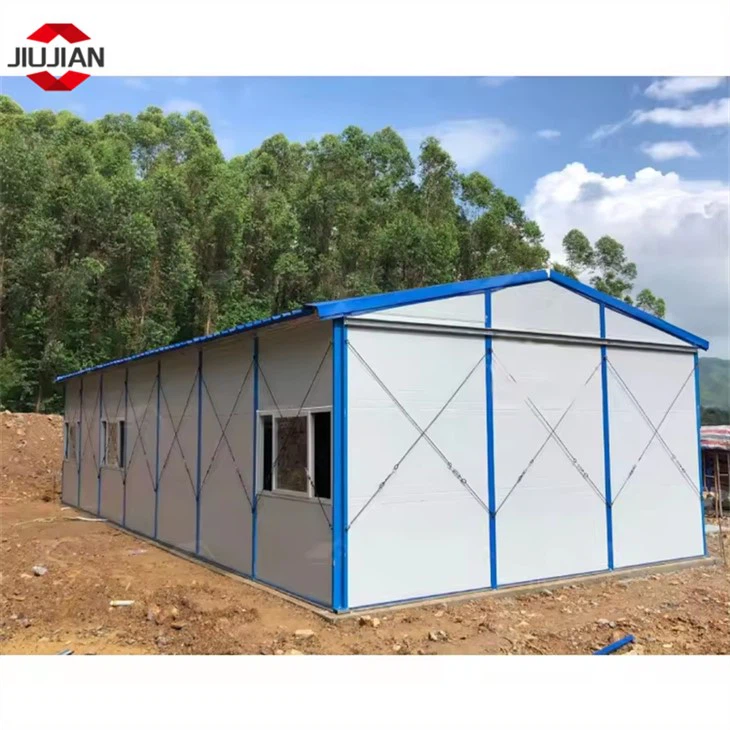
In coastal remote areas, the high humidity and saltwater exposure can lead to rapid corrosion of the steel. We have to use high - quality galvanized steel or apply anti - corrosion coatings to protect the structures. For instance, our Galvanised Steel K - type Prefabricated House is designed to withstand such harsh coastal conditions, but still, proper maintenance is required.

Lack of Infrastructure and Utilities
Remote areas usually have limited infrastructure and utilities, which can impact the construction process. There might be no reliable power supply, which is essential for operating construction equipment such as cranes, welding machines, and drills. We often have to bring in generators to provide power, which adds to the project cost and requires additional fuel and maintenance.
Water is another important resource for construction, but it can be scarce in some remote areas. We need to transport water to the site or find local water sources, which might require drilling wells or making arrangements with local authorities.
In addition, there might be no proper waste management facilities in remote areas. Disposing of construction waste, such as scrap steel and packaging materials, becomes a problem. We need to develop proper waste management plans and find ways to recycle or dispose of the waste in an environmentally friendly manner.
Communication Problems
Good communication is essential for the success of any construction project. In remote areas, however, communication can be a major challenge. There might be poor or no mobile network coverage, which makes it difficult to stay in touch with the construction team, suppliers, and clients.
We once had a project where the lack of communication led to misunderstandings between the on - site team and the design team. This resulted in some errors in the construction, which had to be corrected, causing delays and additional costs.
To overcome this problem, we sometimes use satellite communication systems, but they are expensive and require special equipment. We also need to train the on - site team to use these systems effectively.
High Cost of Materials and Equipment
The cost of materials and equipment is generally higher in remote areas. Due to the limited local supply and the high transportation cost, the price of steel and other construction materials can be significantly higher than in urban areas.
For example, when we were working on a project in a remote island, the cost of steel was almost 30% higher than in the mainland. This was mainly because of the transportation cost and the limited supply on the island.
The cost of renting or purchasing construction equipment is also high in remote areas. There are fewer equipment rental companies, and they often charge a premium for their services. We have to carefully plan our equipment needs and try to find the most cost - effective solutions.
Dealing with Local Regulations and Permits
Remote areas often have their own set of local regulations and permit requirements, which can be complex and difficult to navigate. In some cases, the local authorities might not be familiar with steel structure construction, which can lead to delays in getting the necessary permits.
We once had a project in a remote forest area where we had to obtain multiple permits from different local agencies. The process was time - consuming, and we had to provide detailed environmental impact assessments and construction plans. This added to the project timeline and cost.
It's important to start the permit application process early and work closely with the local authorities to ensure that all the requirements are met.
Conclusion
As a steel structure supplier, dealing with the challenges of construction in remote areas is no easy feat. But despite all these difficulties, we see great potential in these regions. There is a growing demand for steel structures in remote areas for various applications, such as Light Steel Hotel and Light Steel Villa House.
We believe that by understanding these challenges and developing appropriate strategies to overcome them, we can successfully complete steel structure construction projects in remote areas. We are committed to providing high - quality steel structures and services to our clients, no matter how remote the location.
If you're interested in our steel structure products and services for your project, whether it's in a remote area or not, we'd love to have a chat with you. Reach out to us to discuss your requirements and let's work together to make your project a success.
References
- Construction Industry Institute. (2019). Challenges in Remote Construction Projects.
- American Institute of Steel Construction. (2020). Best Practices for Steel Structure Construction in Harsh Environments.
- International Labour Organization. (2018). Labor Shortages in the Construction Sector.